





Android OS 16 Features & Top Mobile Chipsets to Watch in 2026
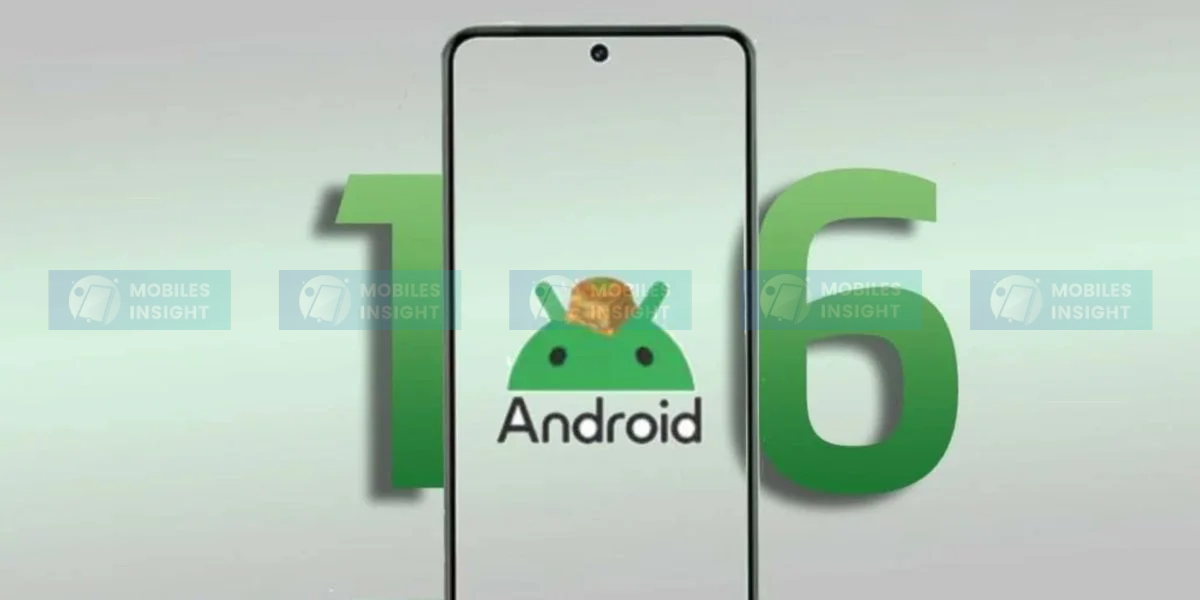
Android OS 16 will change the mobile experience in 2026 with smarter AI, better privacy controls, smoother animations, and improved multitasking features. With top mobile chipsets this year, like Qualcomm’s Snapdragon 8 Gen 4 and MediaTek’s Dimensity 9300 series, users will get faster performance, better battery efficiency, and a great gaming experience. This guide explains the important features and chipsets that will shape the next generation of smartphones, helping tech lovers and everyday users make the right choices in the fast-changing mobile world.
Android OS 16: A Leap into the Future
Android OS 16 comes with big upgrades in multitasking, security, AI features, large-screen support, and tools for developers.
Better Multitasking and Productivity
The new split-screen mode now allows one app to take up 90% of the screen. This makes it easier to work on tasks like taking notes while browsing the internet. The "App Pairs" feature lets you open two apps at the same time in a set layout, helping you work faster and smarter.
Stronger Security and Privacy
Android OS 16 introduces "Advanced Protection" mode to keep your data and apps safe. It includes features like using biometrics for app access and stricter app permission controls, ensuring your information stays private.
Smarter AI Features
The new system includes an upgraded "Assistant" powered by Google's Gemini AI. It can give helpful suggestions, provide real-time updates on topics you care about, and even transcribe and summarize phone calls automatically. This makes your phone more useful and easier to manage.
Improved Support for Large Screens
Android OS 16 works better on foldable phones and tablets. Apps now fit different screen sizes more smoothly, giving a consistent experience. There is also a preview of a desktop-like mode, so you can connect your device to a monitor and use it like a PC.
Developer-Friendly Tools
For app developers, Android OS 16 offers new tools and APIs to make apps better and faster. A two-phase SDK release cycle helps developers add new features quickly, improving apps for everyone.
Overall, Android OS 16 makes your device smarter, safer, and more productive, while giving developers better tools to create great apps.
Top Mobile Chipsets to Watch in 2026
Qualcomm Snapdragon 8 Elite 2
Built on a 3nm process, the Snapdragon 8 Elite 2 uses the new Oryon CPU design, giving up to 30% better CPU performance. The Adreno 840 GPU offers 30% faster graphics. The AI part is also improved, with a Neural Processing Unit (NPU) that can reach 100 TOPS, twice as powerful as the previous version. Early tests show a Geekbench score of 3,393 for single-core and 11,515 for multi-core, with AnTuTu scores over 4 million.
Samsung Exynos 2600
Made with a 2nm process, the Exynos 2600 has ARM’s Scalable Matrix Extension 2 AI built into its CPU. This gives five times better AI performance than the previous model, helping with camera features and voice recognition.
MediaTek Dimensity 9500
The Dimensity 9500 has a 1+3+4 CPU setup and uses a 3nm process. Its new Neural Processing Unit (NPU) doubles AI performance from before. The chip is great for on-device AI tasks, including generative AI and supporting large language models.
Google Tensor G5
The Tensor G5, used in Pixel 10 phones, is built on TSMC’s 3nm process. It has a 34% faster CPU and a 60% stronger Tensor Processing Unit (TPU) than the previous model. It is very good at AI tasks and camera processing but its GPU is weaker, so it is not the best choice for gaming.
Apple A18 Pro
Apple’s A18 Pro uses TSMC’s 3nm N3P process and comes with a 6-core CPU and 6-core GPU. It gives 40% better graphics performance compared to the previous version. Its 35 TOPS Neural Processing Unit (NPU) improves AI tasks like camera features and voice recognition.
Comparative Overview: Snapdragon vs. Exynos vs. MediaTek
|
Features |
Snapdragon 8 Elite 2 |
Exynos 2600 |
MediaTek Dimensity 9500 |
|
Process Node |
3nm (TSMC N3P) |
2nm |
3nm |
|
CPU Configuration |
2x Cortex-X3 @ 4.61 GHz, 6x Cortex-A715 @ 3.63 GHz |
2x Cortex-X3 + 6x Cortex-A715 |
1x Cortex-X930 @ 4.21 GHz, 3x Cortex-X930 @ 3.50 GHz, 4x Cortex-A730 @ 2.70 GHz |
|
GPU |
Adreno 840 |
Not specified |
Mali-G1 Ultra MC12 |
|
AI Performance |
Up to 100 TOPS |
Enhanced |
~100 TOPS |
|
Gaming Performance |
Excellent |
Very Good |
Good |
|
Energy Efficiency |
High |
Very High |
High |
|
Benchmark Scores |
AnTuTu > 4,000,000 |
Geekbench 6: 2,774 (single-core), 9,194 (multi-core) |
Geekbench 6: 2,352 (single-core), 7,129 (multi-core) |
|
Price Segment |
Premium |
Premium |
Mid-Range |
|
Use Case |
Flagship devices, intensive gaming & AI |
High-end flagship devices |
High-performance mid-range smartphones |
Final Thoughts
Android OS 16 will change the way we use smartphones in 2026. It brings smart AI features, better security, and smooth multitasking in one easy-to-use system. With new mobile chipsets like the Snapdragon 8 Elite 2, Exynos 2600, and MediaTek Dimensity 9500, phones will be faster, save more battery, and do smart tasks more efficiently. Flagship smartphones will improve gaming, photography, and AI apps, while mid-range phones will offer high performance at a lower cost. In 2026, smartphones will become faster, smarter, and more efficient, acting as powerful tools in our daily lives. Knowing about these updates will help you choose the best phone and enjoy all the new features Android OS 16 and these top chipsets offer.
Popular Phone Reviews

Samsung Galaxy A70 Review: Features, Performance, and Value Insights

Apple iPhone 16 Pro Max Review: Features, Performance, and Value Insights

Apple iPhone 12 Pro Max Review: Features, Performance, and Value Insights

Xiaomi Redmi 12 Review: Features, Performance, and Value Insights